Agape: The Greek Word for Love
If you have spent any time around church, you have probably heard someone say “agape love.” This page is about what the word actually means, where it shows up in Scripture, and why the writers of the New Testament reached for it when they wanted to describe the love of God.
noun, feminine.
Agape is the New Testament word for deliberate, self-giving love: love that chooses the good of another and keeps choosing it, whether or not the feeling comes.
Greek had several words for love. Eros named desire, and philia named the warm affection of friends. The New Testament writers mostly passed over both and settled on agape, a quieter word, and then filled it with new meaning: the love that God is, and the love the cross displays. Agape is not primarily a feeling. It is a settled intention toward someone else’s good, which is why it can be commanded, promised, and practiced even toward enemies.
The King James Version often translates agape as “charity,” especially in 1 Corinthians 13. That is not charity in the modern sense of donations; it is the old English word for love in action. Read “love” wherever you see it, and the famous chapter comes back into focus: love suffers long, love is kind, love never fails.
The deepest claim Scripture makes about this word is not that we should have it but that God is it. “God is love” in 1 John 4:8 uses agape. His love is not a response to our loveliness; Romans 5:8 says it was proven while we were still sinners. Every command to love begins there.
Key verses
“Charity suffereth long, and is kind; charity envieth not; charity vaunteth not itself, is not puffed up, Doth not behave itself unseemly, seeketh not her own, is not easily provoked, thinketh no evil; Rejoiceth not in iniquity, but rejoiceth in the truth; Beareth all things, believeth all things, hopeth all things, endureth all things.”
Paul’s portrait of agape, rendered “charity” in the KJV. Every line describes an action or a refusal, not a feeling.
“Beloved, let us love one another: for love is of God; and every one that loveth is born of God, and knoweth God. He that loveth not knoweth not God; for God is love.”
Love is not just something God does; it is who He is. Knowing Him and loving others rise and fall together.
“Greater love hath no man than this, that a man lay down his life for his friends.”
Jesus defines the outer limit of love the night before He demonstrates it: laying down your life for your friends.
“But God commendeth his love toward us, in that, while we were yet sinners, Christ died for us.”
God’s love did not wait for us to improve. The cross is its proof, dated to the worst chapter of our story.
“And now abideth faith, hope, charity, these three; but the greatest of these is charity.”
When everything else has served its purpose, three things remain, and love outranks them all.
Scripture quotations are from the King James Version (KJV), public domain.
Trace Agape through the whole Bible
The free PrayerPath app's Explore concordance shows every place Agape (G26) appears, with the full text of each passage and plain-language notes.
 Free. No subscriptions.
Related words
Keep your prayers. Open the Word.
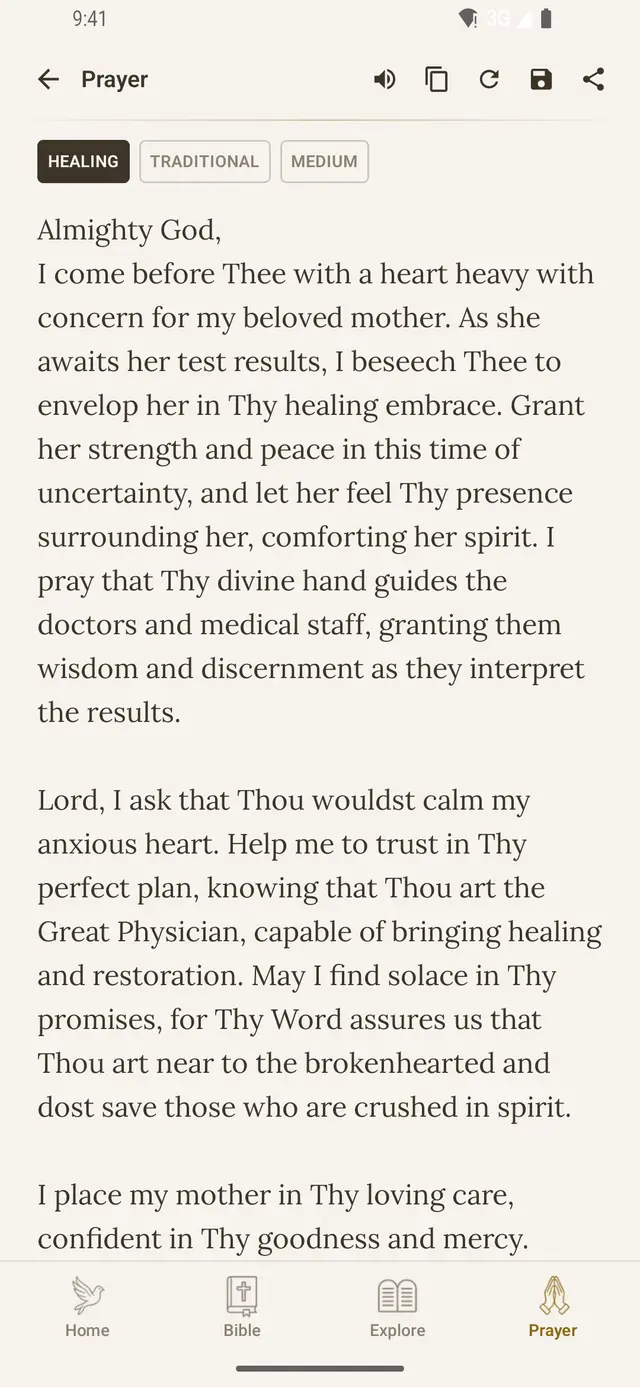
Your prayer journal
Save every prayer, revisit them, and watch how God answers over time.
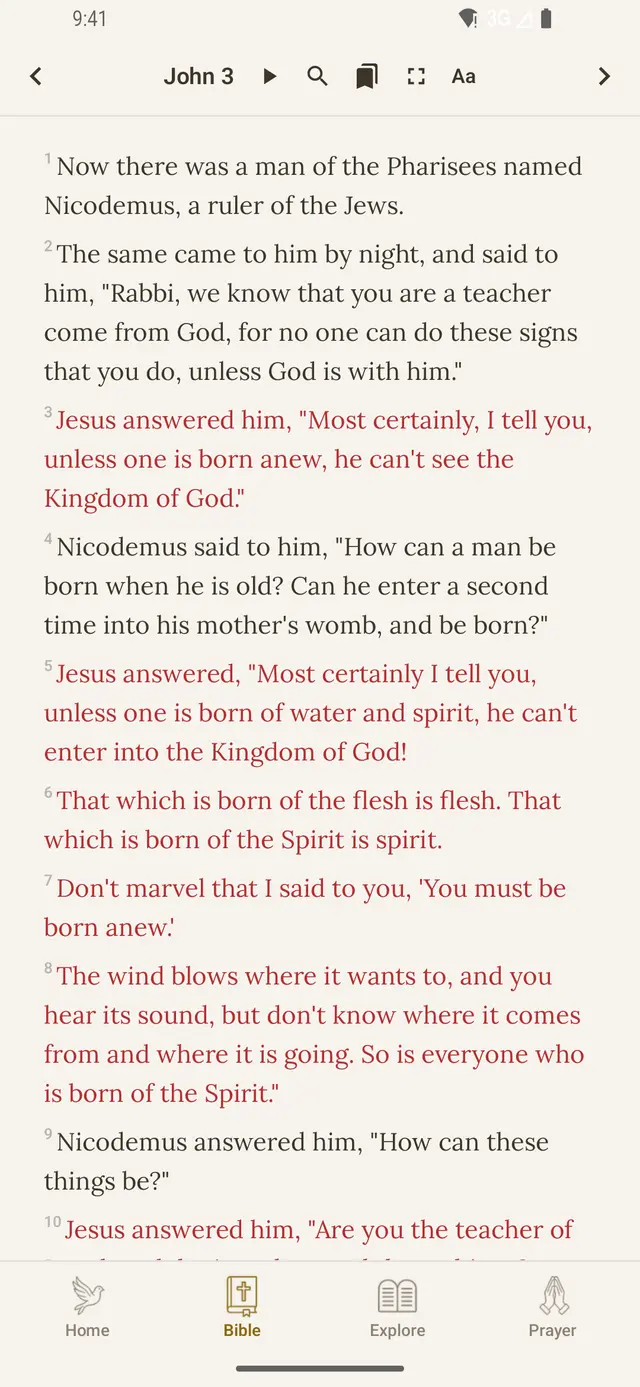
The full Bible
Fifteen translations, words of Jesus in red, and plain-language verse explanations.
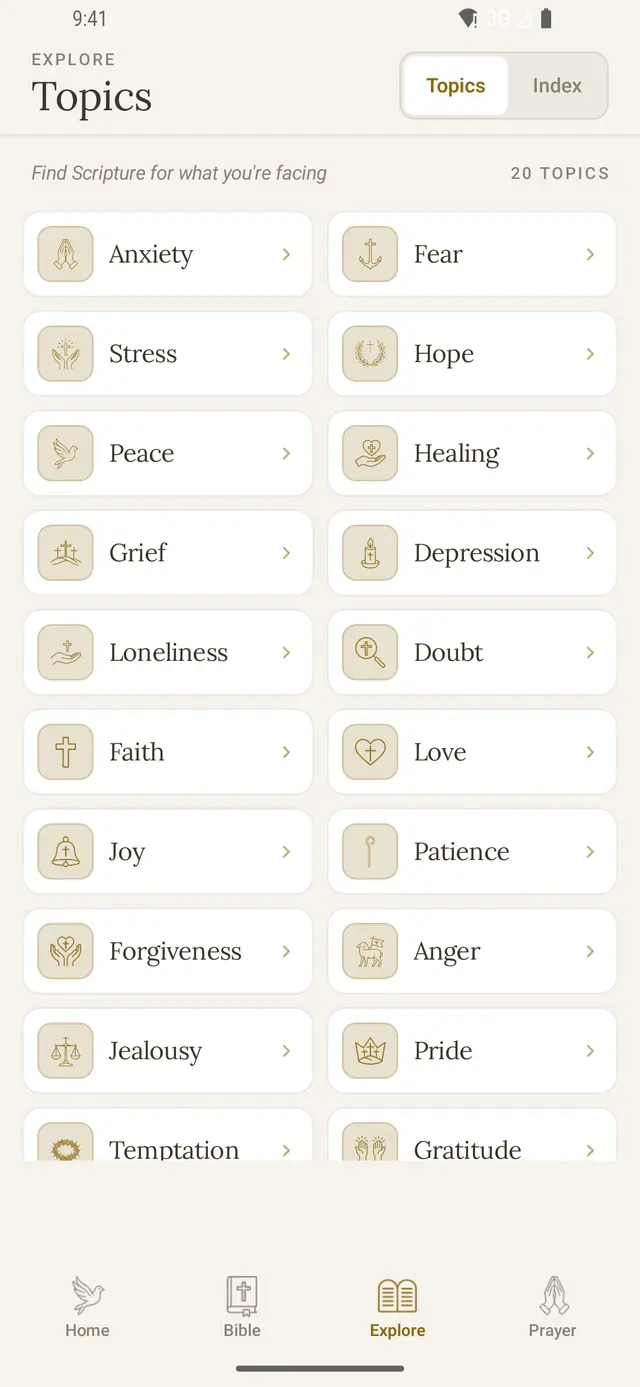
Explore any topic
A concordance that gathers every verse on the things you pray about.
Free. No subscriptions. Every feature included.